The Short Answer
Yes.
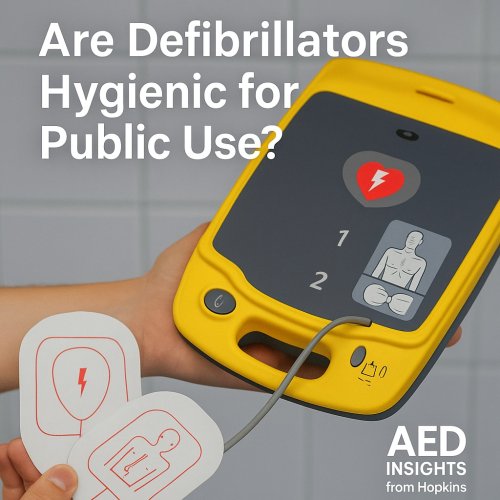
Public access defibrillators are designed with hygiene and safety in mind. The electrode pads used during a rescue are sterile, individually sealed, and intended for single use only.
Once the pads have been used, they are replaced before the AED is returned to service.
In simple terms, every rescue starts with a fresh set of pads.
Why Do People Ask This Question?
It's a reasonable concern.
When people discover that a public defibrillator may have been used on someone else previously, they sometimes wonder whether it is hygienic to use.
The COVID pandemic increased awareness of infection control, and many people now think more carefully about shared equipment than they once did.
Fortunately, AED manufacturers anticipated these concerns long ago.
Are the Pads Reused?
No.
Defibrillator pads are strictly single-use items.
Once the packaging has been opened and the pads have been applied to a casualty, they are discarded after the incident.
A replacement set of pads must then be fitted before the AED is considered rescue ready again.
This is one reason why responsible AED guardians regularly check their devices and replace consumables when required.
What Comes Into Contact With the Casualty?
The adhesive electrode pads are the only part of the AED that normally comes into direct contact with the casualty.
These pads are supplied sterile and sealed by the manufacturer.
When you open the packet, you are using a fresh set that has never been used before.
The AED itself does not normally come into direct contact with the casualty's skin.
What Happens After the AED Has Been Used?
Following a rescue attempt, the AED should be inspected and prepared for future use.
This normally includes:
• Replacing the electrode pads
• Checking the battery status
• Reviewing any accessories used
• Cleaning the exterior surfaces if necessary
• Returning the AED to its cabinet or storage location
At Hopkins⁺, this forms part of our AED Aftercare process following any reported use.
What About CPR?
People sometimes focus on the AED and forget that CPR is usually taking place as well.
Many responder kits include items designed to improve hygiene during a rescue, including:
• Disposable gloves
• Face shields or pocket masks
• Trauma shears
• Towels or wipes
These items help rescuers provide assistance safely while maintaining good infection control practices.
What Happens in Real Life?
One thing I've noticed over the years is that people often worry about the wrong risks.
They're concerned about whether the AED is hygienic.
They're concerned about whether they're using it correctly.
They're concerned about whether they'll make a mistake.
Meanwhile, the casualty is experiencing a life-threatening cardiac arrest.
The reality is that modern AEDs are designed to be used safely by members of the public.
The equipment has been developed specifically for emergency situations where speed, simplicity, and reliability matter most.
Are Public Defibrillators Safe to Use?
Absolutely.
Public access defibrillators are used every day in airports, railway stations, shopping centres, schools, sports clubs, workplaces, churches, village halls, and community settings across the country.
The combination of sealed single-use pads and routine maintenance means that hygiene should never be a reason to hesitate.
Why Maintenance Matters
A well-maintained AED is not only more reliable, it's also safer.
Regular inspections ensure that:
• Pads remain sealed and in date
• Batteries remain operational
• Rescue kits are complete
• The device remains ready for use
This is why ongoing governance and aftercare are so important.
An AED isn't something you install and forget.
It needs regular oversight to ensure it remains ready for the day it's needed.
Final Thoughts
If you're faced with a cardiac arrest, don't let concerns about hygiene stop you from helping.
The pads are sterile.
The pads are single-use.
The equipment is designed for public access.
Most importantly, the person in front of you needs immediate assistance.
The greatest risk isn't using the AED.
The greatest risk is not using it.
About Ken Hopkins
Ken Hopkins is an AED expert with more than 40 years' experience in defibrillation, multiparameter monitor defibrillators, pre-hospital ECG telemetry, community AED governance, training, and support.
Need advice about community defibrillators, governance, training, servicing, or AED Aftercare?
Hopkins⁺ Training and Support is always happy to help.