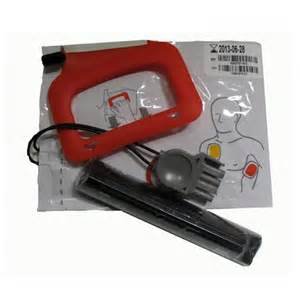
We’re seeing a growing number of emails about the LIFEPAK CR Plus that, while factually based, are framed in a way that pushes customers toward rushed decisions.
Yes, Stryker has confirmed that CR Plus Pad-Paks and Charge-Paks will be discontinued from February 2026. That part is not in dispute.
What is often missing is context.
Many CR Plus units currently in service have electrode sets fitted that remain in date through to 2027 and, in some cases, into 2028. That means those devices are not “nearly unusable” and they are certainly not about to fail overnight.
The suggestion that most CR Plus AEDs will be unusable by late 2026 simply does not stack up when you look at real-world configurations and expiry dates already installed on sites.
This is where use model matters.
If your AED has never been deployed in anger, and your location or footfall suggests it is unlikely to be used before the current electrodes expire, then there is no technical or clinical reason to replace a fully functional device today purely because consumables will eventually become unavailable.
That does not mean doing nothing. It means thinking clearly.
A sensible approach is to:
Confirm the expiry date of the electrodes currently installed, not hypothetical future stock
Review historical usage and realistic likelihood of deployment
Factor in any planned changes to the site or risk profile
Plan replacement based on evidence and timing, not pressure
For some organisations, upgrading early will still be the right call. For others, running the CR Plus safely through the remaining consumable life is entirely reasonable and defensible.
Good AED governance is about proportionate decision making. It is not about reacting to alarming language, limited time offers, or the implication that you are somehow exposed if you don’t act immediately.
If you’re unsure, speak to someone who understands AED lifecycle management, not just device sales. Calm, informed decisions almost always turn out to be the right ones.