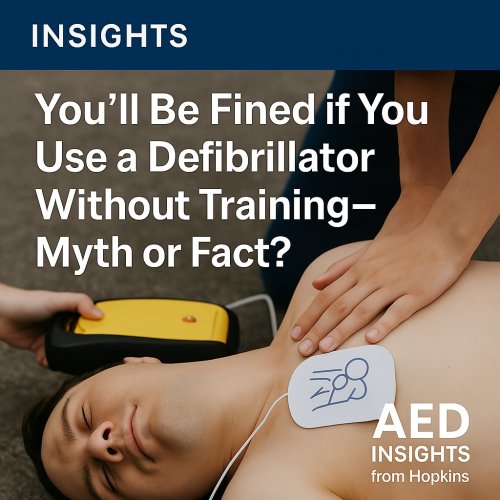
The Short Answer
No.
You will not be fined for using a defibrillator in an attempt to save someone's life.
In fact, public access defibrillators are specifically designed so that members of the public can use them, whether they have received formal training or not.
If someone is suffering a cardiac arrest, the most important thing is to act.
Call 999, start CPR, and use the AED if one is available.
Where Does This Myth Come From?
It's difficult to pinpoint exactly where this myth started, but it often appears alongside other misconceptions about first aid.
Some people worry that they need a certificate before they can use a defibrillator.
Others believe there could be legal consequences if they make a mistake.
I've even met people who thought they might be prosecuted for attempting to help.
None of these concerns should stop you from acting.
Why Public Defibrillators Exist
Public access defibrillators are installed because cardiac arrests often happen before healthcare professionals arrive.
The whole purpose of a community AED is to allow ordinary people to provide early treatment.
Village halls.
Sports clubs.
Churches.
Schools.
Community centres.
Town centres.
The devices are there because somebody recognised that a life may depend upon a member of the public stepping forward.
Do I Need Training?
No.
Training is helpful.
Training builds confidence.
Training helps people understand what to expect.
But training is not a legal requirement.
Modern AEDs provide clear voice instructions throughout the rescue.
The device guides you step-by-step.
It analyses the casualty's heart rhythm and determines whether a shock is required.
You are not expected to make medical decisions.
The AED does that for you.
What Does the Law Say?
In the UK, there is no law requiring you to hold a first aid certificate before using a public access defibrillator.
The law generally recognises the difference between somebody trying to help during an emergency and somebody acting recklessly.
When a person is suffering a cardiac arrest, immediate intervention is often their best chance of survival.
The law does not punish people for making genuine efforts to save life.
What Happens in Real Life?
One thing I've learned over the years is that many people who save lives don't consider themselves heroes.
They're ordinary members of the public.
Shop workers.
Parents.
Teachers.
Neighbours.
Sports coaches.
Retired people.
People who simply found themselves in the right place at the right time and chose to help.
Very few stop to ask whether they hold the correct certificate.
They see somebody who needs help and they act.
Could I Make Things Worse?
This is often the fear behind the myth.
People worry that if they don't know what they're doing, they might somehow cause harm.
The reality is that a person in cardiac arrest is already experiencing a life-threatening emergency.
The AED will only deliver a shock if one is medically required.
You cannot accidentally force the machine to shock someone who doesn't need it.
That's one of the reasons public access AEDs are so safe.
Why Training Is Still Valuable
Although training isn't required, I always encourage people to attend a demonstration or awareness session if they have the opportunity.
Not because they're legally obliged to.
But because confidence saves time.
When you've seen an AED before, handled the pads, and heard the voice prompts, you're more likely to act quickly when faced with a real emergency.
Final Thoughts
Let's put this myth to bed once and for all.
You do not need a certificate.
You do not need permission.
You will not be fined for trying to save someone's life.
Public access defibrillators exist because ordinary members of the public can and do make a difference.
If someone suffers a cardiac arrest, don't let fear of legal consequences stop you from helping.
The person in front of you needs action, not hesitation.
About Ken Hopkins
Ken Hopkins is an AED expert with more than 40 years' experience in defibrillation, multiparameter monitor defibrillators, pre-hospital ECG telemetry, community AED governance, training, and support.
Need advice about community defibrillators, governance, training, servicing, or AED Aftercare?
Hopkins⁺ Training and Support is always happy to help.